A new way to resolve conflict
When you can't talk to each other,
talk to us.
An AI mediator that talks privately with each person. It understands both perspectives. It never reveals either. It helps you move from opposition to understanding.
US$5 per person, one-time. No account required. Fully encrypted.
What is mediation
A conversation that changes how you see the conflict.
Mediation is a structured process where a neutral third party helps people in conflict understand each other and find their own path forward. Unlike going to court, there is no judge, no verdict, no winner or loser. Unlike therapy, the focus isn't on diagnosing or treating -- it's on restoring the quality of your relationship.
The mediator doesn't tell you what to do. They don't take sides or offer opinions. Instead, they help each person examine their own assumptions, recognize the other person as genuinely different -- not wrong, just different -- and discover what matters beneath the surface of the argument.
Mediation works by helping people move from opposition to understanding. Not through compromise, where both sides give something up. Through genuine recognition -- where both sides gain a deeper understanding of themselves and each other. When that happens, resolution follows naturally.
Why mediation
You have three choices when a conflict feels stuck.
You can fight it out in court. You can avoid it and hope it fades. Or you can understand it. Only one of these preserves the relationship.
Go to court
- × Expensive, adversarial, and slow
- × A judge decides the outcome for you
- × Everything becomes public record
- × Relationships rarely survive
- × High emotional cost for everyone
Do nothing
- × Resentment builds silently
- × Patterns repeat and deepen
- × Trust continues to erode
- × Distance grows wider over time
- × The real issues never get addressed
Mediate Recommended
- ✓ You stay in control of the outcome
- ✓ Private and confidential
- ✓ Fast -- days, not months
- ✓ Preserves and strengthens relationships
- ✓ Both people gain genuine understanding
What makes this different
Two separate conversations. One AI that understands both.
This isn't a group chat. Each person has their own private, encrypted conversation with the AI mediator. The AI listens to both sides simultaneously -- but it never tells either person what the other said. Instead, it uses the full context of both conversations to guide each person toward deeper understanding.
Speaks freely, in complete privacy
Person A tells their side of the story. Their frustrations, their feelings, their version of events. The mediator listens without judgment and asks questions that help them examine their own assumptions and uncover what they really need.
sees both,
reveals neither
A completely separate space
Person B has their own conversation. They share their truth without fear of being overheard. The mediator -- informed by the full picture but bound to secrecy -- asks the questions that matter most for this person's journey toward understanding.
Simultaneous, real-time
Both people can talk to the mediator at the same time. There's no waiting, no scheduling. The AI is always available, endlessly patient, and never tired.
Full context, zero leakage
The AI uses everything it hears to ask smarter questions. But an independent auditor validates every response to ensure it never reveals, hints at, or leaks what the other person shared.
No sides, no bias
The AI doesn't decide who's right. It doesn't ally with either person. It guides both toward understanding by helping each see what they couldn't see alone -- including their own blind spots.
How it works
Three steps. Two private conversations. One path toward understanding.
Each person talks separately with the mediator. The AI understands both perspectives but never reveals what the other person said. This separation creates safety. Safety creates honesty. Honesty creates understanding.
Create a private session
Start a mediation space in seconds. You'll get a link to share with the other person. No accounts, no emails, no sign-ups. Just a private, encrypted space for two people and a mediator.
Each person talks privately with the AI
This is the heart of the process. Each person has their own separate conversation with the mediator. You speak freely, knowing nothing you say will be shared. The mediator listens deeply, asks thoughtful questions, and helps you examine what's really going on beneath the surface of the conflict.
The mediator asks better questions
Because the AI understands both perspectives, it can ask each person the questions that matter most -- the ones you haven't thought to ask yourself. It helps you examine assumptions, recognize patterns, and discover what the other person might need, without ever revealing what they said. Understanding grows from within, not from exposure.
Two ways to mediate
Two ways to mediate. You choose how close you stand.
Every mediation runs one of two ways. Same price, same encryption, same 30-day deletion — the only thing that changes is whether you talk to the mediator privately, or sit in one shared room together.
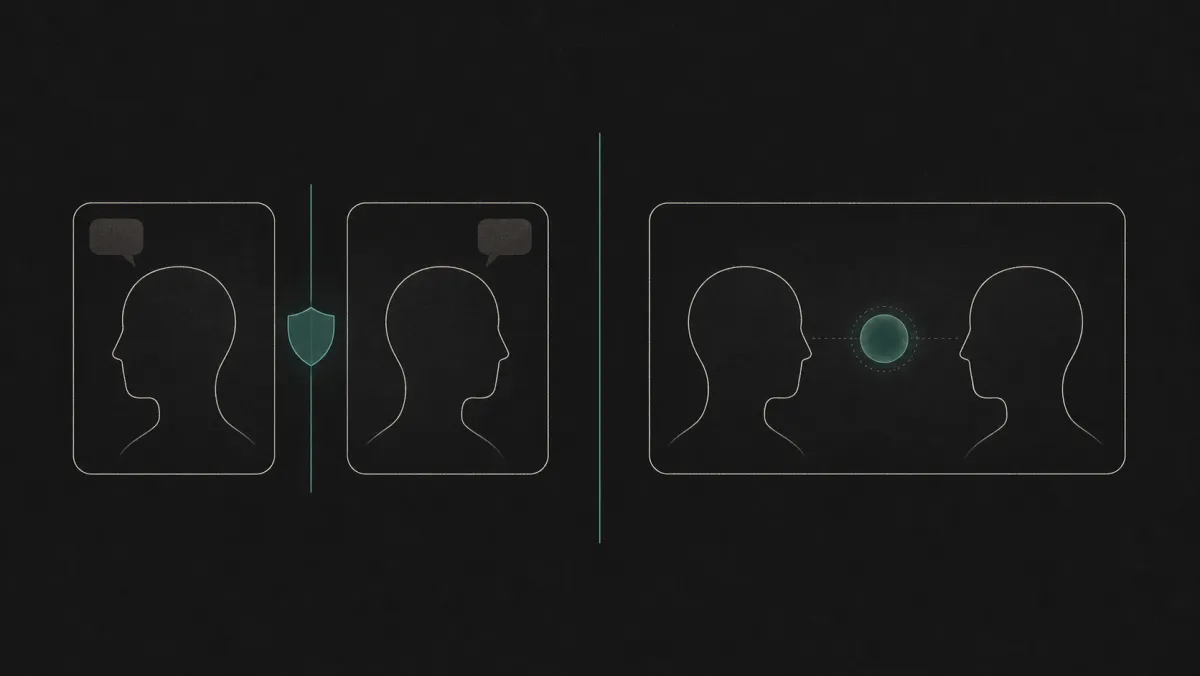
Shuttle Recommended for most
Two private conversations. Nothing you say is ever shown to the other person.
- You each talk to the mediator alone — the other person never sees your messages.
- The AI understands both sides but never reveals either.
- You can be fully honest without managing the other person's reaction.
- Best when emotions run high or one person tends to dominate.
Feels like: a calm 1:1 where you finally say the whole thing.
Joint
One shared room. You both see everything, and the AI speaks only when it helps.
- The same conversation, with strict turns — you speak, then they speak.
- Everything is visible to both of you, by design.
- The AI stays mostly quiet, stepping in to slow down, reframe, or ask the unlocking question.
- Best when you can sit together calmly.
Feels like: a hard conversation, but with someone keeping it a conversation.
In shuttle, the barrier between you is absolute; in joint, there is no barrier — by design. Not sure? Most people start with shuttle.
| What changes | Recommended Shuttle | Together Joint |
|---|---|---|
| Who sees your messages | ShuttleOnly you and the mediator. | JointBoth of you and the mediator. |
| Format | ShuttleTwo private 1:1 conversations. | JointOne shared room, strict turns. |
| The AI's role | ShuttleGuides each of you privately. | JointMostly quiet; speaks only when useful. |
| Information barrier | Shuttle Included: Absolute — nothing crosses over. | Joint Not included: None — everything is shared, by design. |
| Best when | ShuttleEmotions run high, or one person dominates. | JointYou can sit together calmly. |
| What it feels like | ShuttleA calm 1:1 where you say the whole thing. | JointA hard conversation, kept a conversation. |
| Where honesty comes from | ShuttlePrivacy — no one is reacting to you. | JointTransparency — you both hear the same words. |
| Price | ShuttleUS$5 per person, one-time. Both pay. | JointUS$5 per person, one-time. Both pay. |
| If your partner never joins | ShuttleYou're refunded automatically within 7 days. | JointYou're refunded automatically within 7 days. |
What it's like
What it's like, step by step.
Both methods start the same way: you both pay your one-time US$5, and the mediation begins only once both of you have paid. Here's how each one unfolds.
Shuttle — two private conversations
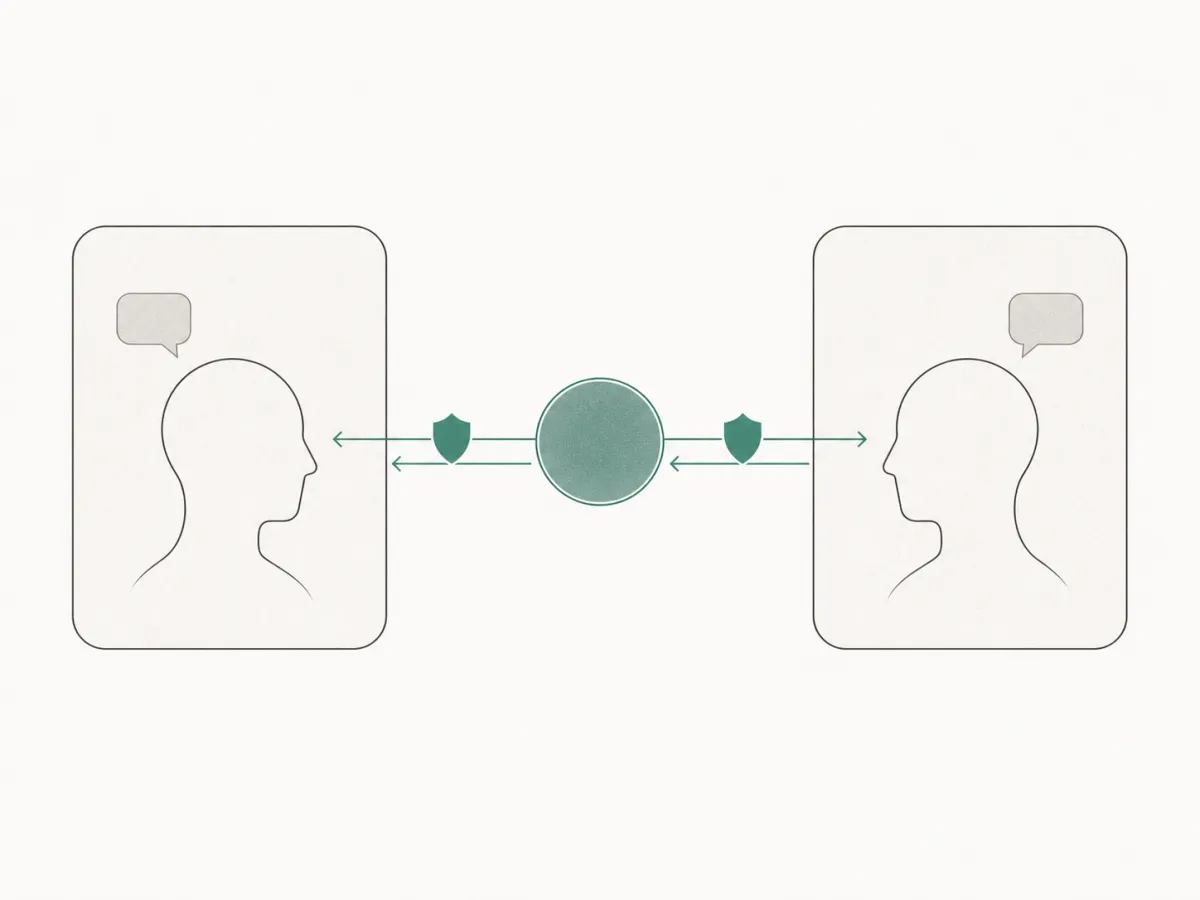
Create and pay your US$5
Start a session and pay your one-time US$5. You get a link to share. If the other person never joins within 7 days of your payment, you're refunded automatically — no asking.
They join and pay their US$5
Until they do, you see a calm waiting screen. The mediation begins only once both of you have paid — never before.
Each of you talks to the mediator alone
You each have your own private conversation. Nothing you say ever crosses over to the other participant.
Understanding grows, nobody is exposed
The mediator uses both sides to ask each of you sharper questions — so understanding grows without anyone being put on the spot.
Joint — one shared room
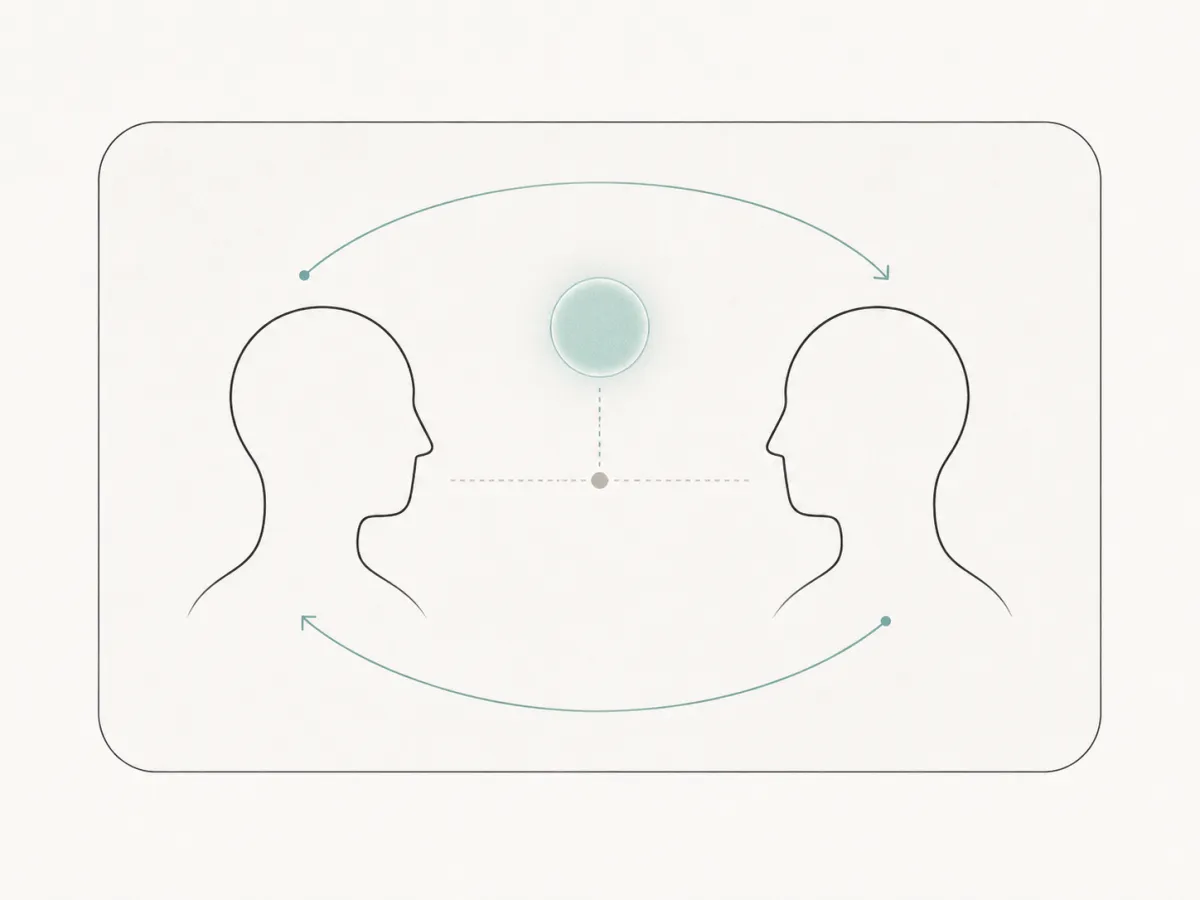
Open a room and pay your US$5
Open a shared room and pay your one-time US$5. As with shuttle, if your partner never joins within 7 days of your payment, you're refunded automatically.
They join and pay — the room unlocks for both
Once both of you have paid, the shared room unlocks for both at once.
You take turns — strict turns
You speak, then they speak, in strict turns. Everything is visible to both of you.
The mediator steps in only when it helps
The AI stays mostly quiet, stepping in only to slow things down, reframe, or ask the question that moves you forward.
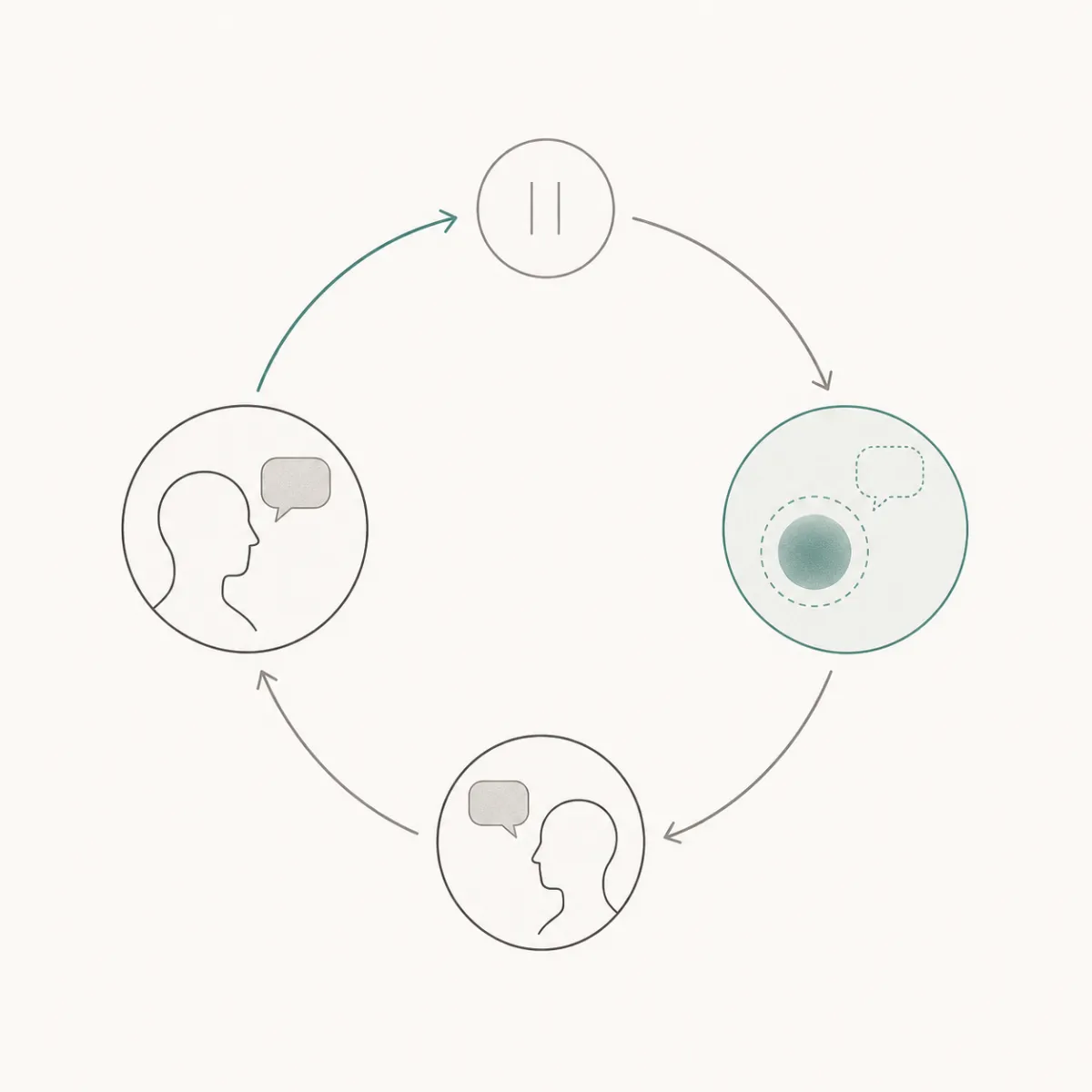
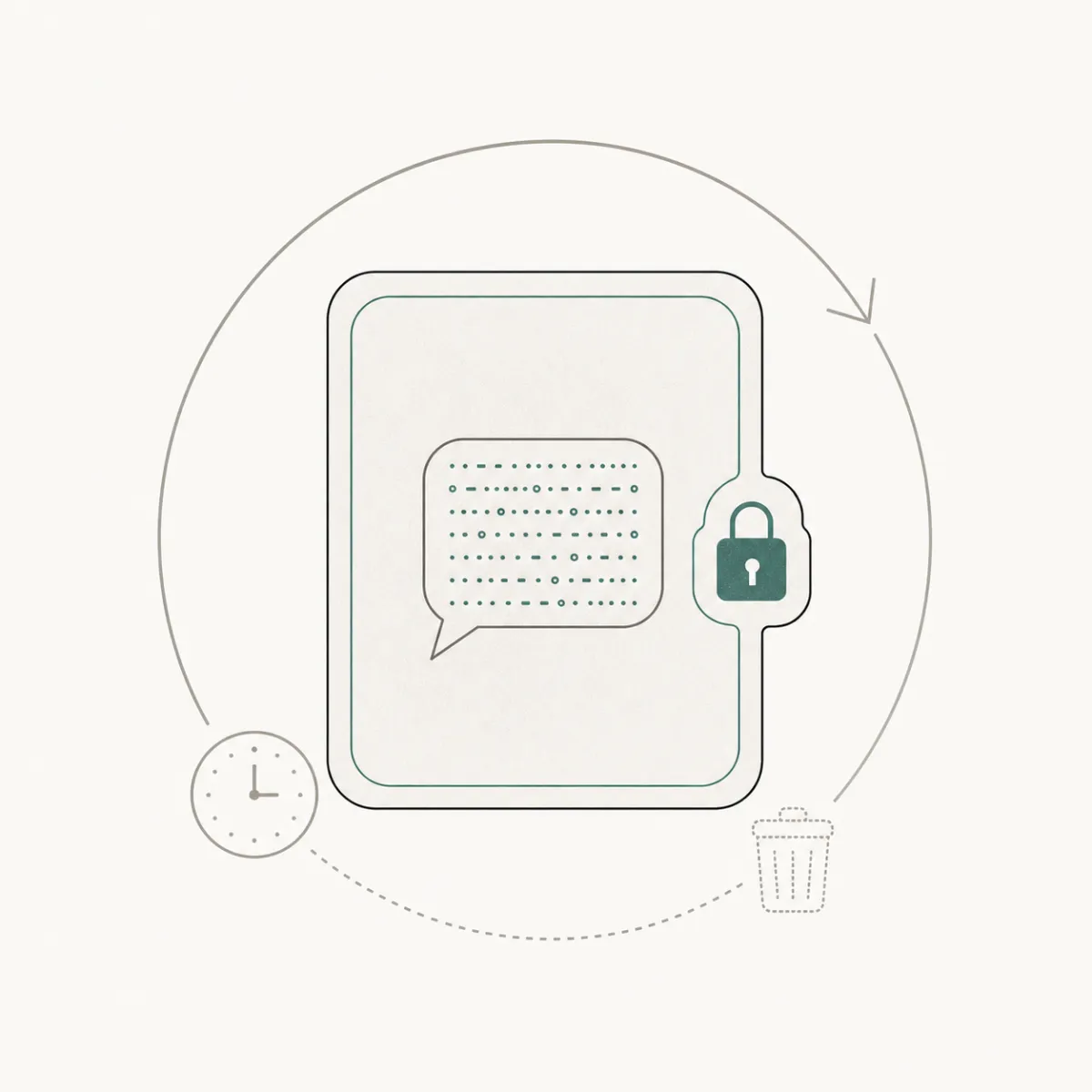
Whichever method you choose, every message is encrypted, nothing you share is shown to the other participant, and everything is automatically deleted after 30 days.
Pricing
Simple, honest pricing.
One price. No subscriptions, no accounts, no hidden fees. Both people pay the same small amount, once.
Shown in US dollars; local tax or VAT may be added at checkout — our payment partner Paddle handles that as Merchant of Record.
We charge $5 on purpose. It's not about the money — the small act of both people being willing to invest something, together, is often the first sign you both want to resolve this.

Auto-refund if your partner never joins
If your partner hasn't paid within 7 days of your payment, we refund you automatically — you don't have to ask.
No refunds once a mediation is active
Once both of you have paid and the mediation has begun, payments are non-refundable — except in the case of a genuine technical failure on our side. See our Refund Policy.
AI Mediation is not legal, financial, medical, or therapeutic advice, and is not a substitute for professional or crisis support.
It's built for ordinary disagreements between two consenting adults. If you feel unsafe or are in crisis, please contact local emergency services or a qualified professional.
The approach
Understanding comes before resolution.
We don't rush toward compromise. We don't tell you what to think or feel. We work from the belief that when people truly understand each other, they find their own way forward.
Recognize the other person as different, not wrong
Most conflict comes from a failure to see the other person as they actually are. We assume their intentions, project our fears, and react to the version of them we've constructed in our mind. The mediator helps you step back from this -- to genuinely recognize that the other person has a different experience, different needs, and a different perspective that is valid on its own terms.
Focus on the relationship, not just the dispute
A specific argument is usually a symptom. The real question is: what happened to the relationship that made this conflict possible? The mediator helps you look at the patterns, the communication breakdown, the unspoken needs -- the relational quality that has shifted. When you address the relationship, the specific dispute often resolves itself.
Ask questions, not give answers
The mediator uses careful, open-ended questioning to help you arrive at your own understanding. It doesn't tell you what to do or what the other person is feeling. It asks the questions you haven't asked yourself yet -- the ones that illuminate what's really going on. When you discover the insight yourself, it sticks.
From opposition to understanding
The goal isn't a deal where both people grudgingly give something up. It's a genuine shift in how you see each other and the situation. When you move from seeing the other person as an adversary to truly understanding their perspective, you don't need someone to impose a solution. You create one together, because you finally understand what each person actually needs.
See it in action
Experience how the mediator guides a conversation.
Choose a response to see how the mediator helps you think deeper. This is a simplified example -- your real conversation will be much richer.
Privacy & trust
Your words stay yours. That's not a feature. It's a promise.
Mediation only works when people feel safe enough to be honest. We've built every layer of this system around that principle.
End-to-end encryption
Every message is encrypted with AES-256-GCM before it touches a database. Your conversations are protected by the same standard used by banks and governments.
Auto-deleted after 30 days
Nothing is stored forever. Every session and its messages are permanently deleted after 30 days. No archives, no backups, no exceptions.
No accounts, no tracking
No email, no sign-up, no profile. You don't need to hand over your identity to work through a conflict. Start a session and begin.
The AI never reveals the other side
This is the hardest line, and it is absolute. The AI knows both perspectives but will never share, hint at, or relay what the other person said. The information barrier is unbreakable.
Who it's for
For anyone stuck in a conversation that isn't happening.
Mediation isn't only for courtrooms and lawyers. It's for any two people who have lost the ability to understand each other.
When every conversation loops back to the same unresolved tension, mediation helps you break the cycle by addressing what's underneath it.
When the partnership that started with shared vision has become a careful dance of avoidance, mediation restores direct communication.
When a single event or slow drift has created a rift, mediation helps each person understand what the other actually experienced.
When small frustrations have accumulated into resentment, mediation creates a safe space to finally say what needs to be said.
When the friendship matters too much to lose but the honest conversation feels too risky, mediation helps you find the words.
When a boundary issue, noise complaint, or shared space has turned into a personal conflict, mediation de-escalates and finds workable solutions.
Common questions
What you might be wondering.
What exactly is mediation?
Is this therapy?
Can an AI really help with conflict?
What does the AI know about the other person?
How is this different from just talking it out?
Is my conversation private?
What if I'm in an abusive situation?
How much does it cost?
Which method should I choose?
What if I pay but they never join?
Ready to understand each other?
It takes two minutes to start. No accounts. No commitments. Just a private conversation that helps you see each other clearly again.
Start a Session